
Box Truss vs. Ladder Truss: Which Should You Choose for Your Event?
Conder Truss Technical Team | Last Updated: May 2026
For most live events, box truss is typically the preferred choice when you need higher load capacity, structural rigidity, and a clean professional appearance. Ladder truss is a cost-effective option for straight runs with lighter loads where visual simplicity matters more than strength-to-span ratio. The decision comes down to three factors: span length, load requirements, and how visible the structure will be during the event.
Quick Decision Guide
| If your event needs… | Choose… |
|---|---|
| Long spans, heavier fixtures, or overhead rigging | Box truss |
| Short straight runs with minimal load | Ladder truss |
| Corners, curves, or multi-directional structures | Box truss |
| Tight budget, simple backdrop or pipe-and-drape alternative | Ladder truss |
| Camera-facing or stage-front structures | Box truss |
| Outdoor ground support systems | Box truss |
Key Takeaways
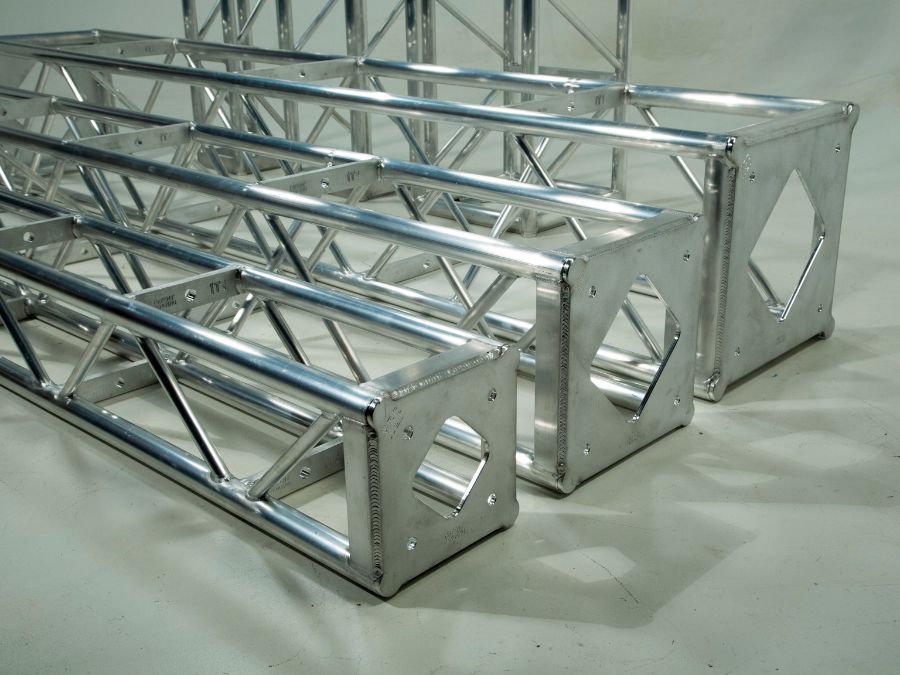
- Box truss handles higher loads across longer spans. The four-chord construction distributes weight across multiple planes, which is why it’s the standard for overhead rigging in concert and festival production.
- Ladder truss is two-dimensional. It works well for straight runs and light-duty work, but has significantly less torsional resistance than box truss, making it more susceptible to twisting under uneven loading.
- Box truss looks more professional on stage. The square profile reads as intentional and polished. Ladder truss in a prominent position can look unfinished to audiences and clients.
- Mixing both types is common practice. Many productions use box truss for the main grid and ladder truss for secondary utility runs backstage or in non-visible areas.
- Span length determines the conversation. As a general rule, shorter straight runs with lighter loads are where ladder truss becomes a practical option. Longer spans, heavier loads, or complex builds point toward box truss — always verify against the manufacturer’s load chart for the specific truss at your actual span.
Step-by-Step: How to Choose the Right Truss Type
Step 1: Define Your Load Requirements
List every fixture, cable run, speaker, LED panel, scenic element, or piece of equipment that will hang from or attach to the structure. Include cable weight, rigging hardware, and any accessories that add load. Total that number before making a truss decision.
Step 2: Identify Your Span Lengths
Measure the distance between support points and compare that span against the manufacturer’s load chart for the exact truss being used. The longer the span, the less load the truss can typically carry, this step determines whether ladder truss remains practical or whether box truss is the safer direction.
Step 3: Consider the Structural Geometry
If your design includes corners, diagonal runs, curves, or multi-directional sections, box truss is usually the better choice. Ladder truss is designed primarily for straight runs and has significantly less torsional strength, making it less suitable for off-axis loading or complex layouts.
Step 4: Assess Visibility
Will the truss be visible to the audience, on camera, or in event photography? Box truss has a consistent, structured appearance that reads well in professional production settings. Ladder truss is usually better suited to utility runs, secondary support, or areas that stay out of sight.
Step 5: Review Your Support System
Ground support towers, motors, rigging points, and connection hardware all have rated capacities. Your truss selection needs to match the full support system, not just the visual design. If a system was designed around box truss, do not substitute ladder truss without reviewing the load ratings, connection requirements, and overall design.
Step 6: Consult Before You Commit
For any overhead, load-bearing, outdoor, or complex structure, verify the design against the manufacturer’s load charts and consult a qualified rigging professional, structural engineer, or project lead when required. Truss specs and load charts provide the starting point, the final decision depends on the full event setup.
Concrete Examples
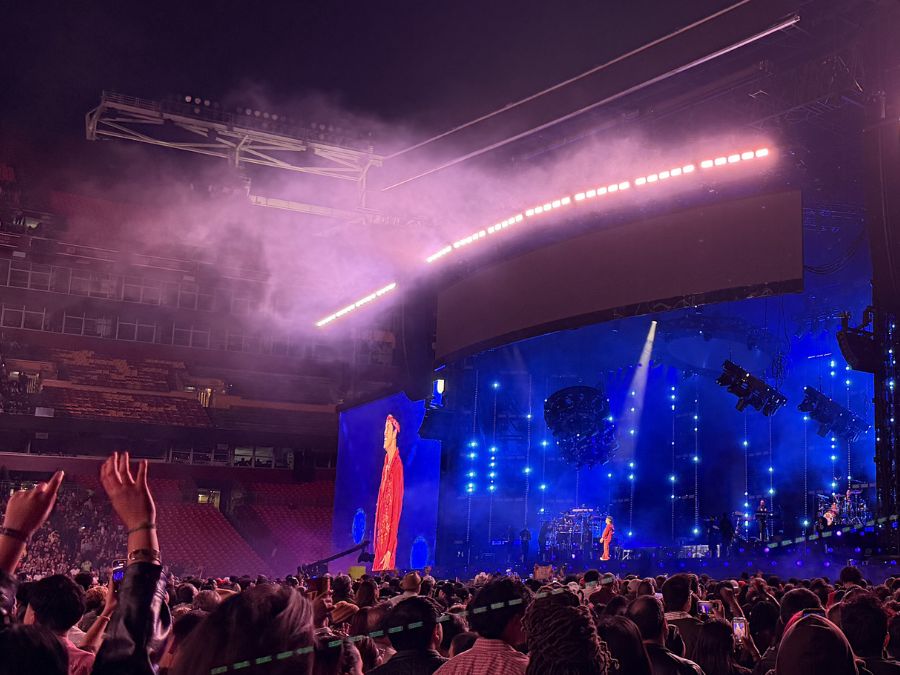
Example 1: Corporate Award Ceremony, Hotel Ballroom
Scenario: 40-foot wide stage, LED video wall, four moving lights, camera-facing setup.
Recommendation: Box truss across the full stage width. The weight of an LED video wall alone can exceed what ladder truss is suited to handle at a wider span. The structure will also appear in broadcast footage and photography, so appearance matters.
Example 2: Outdoor Music Festival, Secondary Stage
Scenario: 30-foot span, multiple audio hang points, full weather exposure, ground support system in place.
Recommendation: Box truss with a ground support system rated for outdoor conditions. Wind, weather, suspended audio loads, and wider spans make ladder truss the wrong choice for this type of overhead structure.
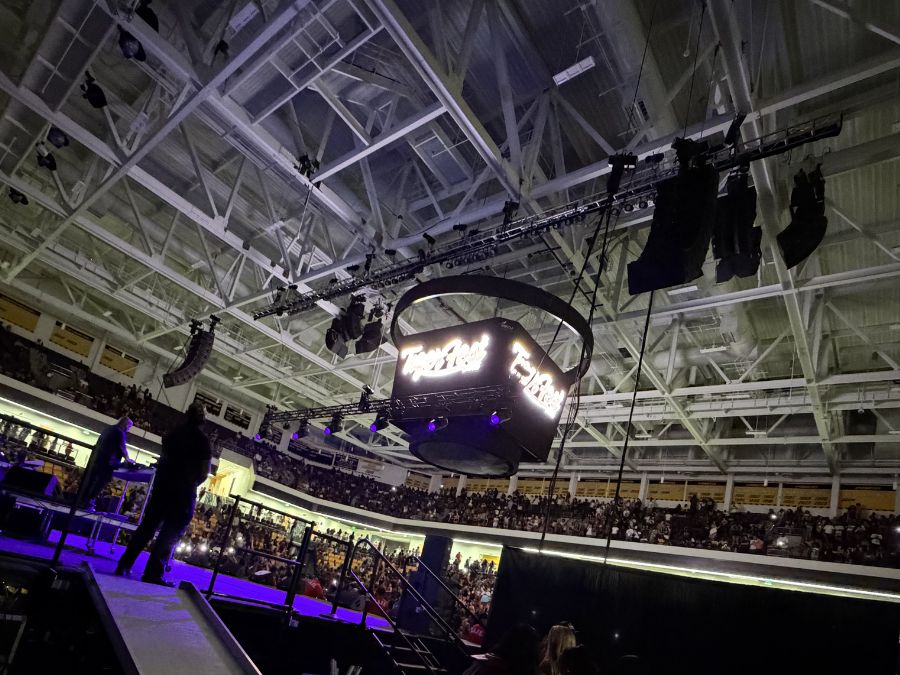
Example 3: Tradeshow Booth, 10×10 Footprint
Scenario: Minimal fixture load, straight overhead run for two LED par cans, compact design.
Recommendation: Ladder truss is a reasonable option here. The span is short, the load is light, and the structure is not carrying complex production equipment. Box truss would also work, but may be more than the application requires.
Example 4: Theater Touring Production
Scenario: Complex overhead grid, multiple angles, automated fixtures, repeated setup and teardown.
Recommendation: Box truss throughout. Touring grids need consistent torsional strength, efficient connections, and repeatable rigging geometry, box truss is the better fit for all three.
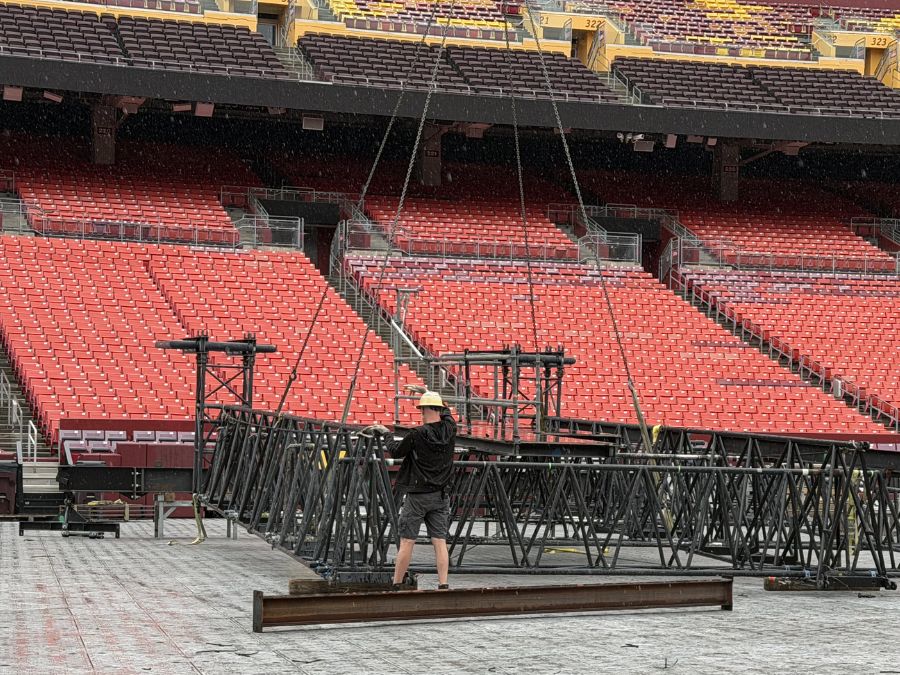
Example 5: Backstage Utility Run, Large Festival
Scenario: Cable management and light-duty LED work lights above a backstage corridor, not visible to audiences.
Recommendation: Ladder truss is acceptable here. The application is utility-grade, out of sight, and the load is minimal. This is the kind of secondary use where ladder truss makes practical and economic sense.
Mixing Box and Ladder Truss
Using both types in the same production is standard practice. Box truss carries the load on your primary overhead grid, main stage, and any structure that needs to handle significant weight or be visible. Ladder truss handles backstage utility runs, secondary cable management, light-duty lighting bars in non-camera areas, and display structures where load is minimal and appearance isn’t a priority.
If you’re mixing both types in one production, connection compatibility needs to be planned, box truss and ladder truss do not connect directly to each other, so integration points require appropriate hardware and clean layout planning.
XSF Truss from Conder Truss
Conder Truss is the exclusive East Coast distributor of XSF Truss — manufactured in Sulphur Springs, Texas — and supplies both box truss and ladder truss for a full range of event and production applications.
For project consultation, specific load and span questions, or custom fabrication needs, contact Conder Truss directly.
Getting to the Right Decision
If your structure carries significant load, is overhead, is visible to the audience, involves corners or multi-directional runs, or will be used outdoors — box truss is the right answer. If your application is a short straight run, utility-grade, out of sight, and carries minimal load — ladder truss can be a practical and cost-effective choice.
When in doubt, spec box truss. The cost difference between truss types is small compared to the liability exposure of under-specifying an overhead structure.
Frequently Asked Questions
What is the main structural difference between box truss and ladder truss?
Box truss uses four primary chords connected by diagonal bracing on all four sides, creating a closed structural profile with strong resistance to bending and torsion in multiple directions. Ladder truss uses two chords connected by rungs on a single plane, lighter and less expensive, but with significantly lower load capacity and minimal resistance to twisting or off-axis loads.
Can ladder truss be used for overhead rigging?
Yes, in certain applications where the specific ladder truss is rated for the intended load and span. However, most professional production environments use box truss for overhead rigging because the four-chord design offers greater rigidity and handles uneven loading more effectively. Always confirm the manufacturer’s load ratings for the exact truss and span being used.
Is box truss always more expensive than ladder truss?
Per linear foot, box truss typically costs more to purchase or rent. However, total project cost depends on span requirements, support towers, rigging points, hardware, labor, and the overall event design. In larger builds, box truss may reduce the need for extra support points, which can help offset the higher upfront cost.
What truss type works best for outdoor festival ground support?
Box truss is standard for outdoor festival ground support systems. The structural demands of outdoor conditions, including wind load, uneven terrain, and the need for stable upright connections, require the torsional rigidity that box truss provides.
Can you mix box truss and ladder truss in the same rig?
Yes, and many productions do. The standard approach is to use box truss for the primary structural grid and any overhead load-bearing runs, then use ladder truss for secondary, lighter-duty, or out-of-sight utility applications. The two types do not connect directly to each other, so integration points need to be accounted for in the design.
What are the common sizes for box truss used in live events?
Common box truss sizes include 12-inch, 16-inch, 20.5-inch, and 30-inch square profiles. Larger profiles are used when a project needs longer spans, higher load capacity, or larger production structures. The XSF truss supplied by Conder Truss covers a range of sizes for tradeshow builds, corporate events, concerts, festivals, and arena-scale grids.
How do I know if my truss selection meets safety requirements?
Start with the manufacturer’s published load charts for the exact truss product and your actual span. For any overhead, load-bearing, outdoor, or complex application, have the design reviewed by a qualified rigging professional, structural engineer, or other qualified project authority. Load charts define the parameters, a qualified person confirms the design meets those parameters in your specific application.
Does powder coating affect structural performance?
No. Powder coating is a surface finish applied after fabrication and does not change the rated load capacity of the truss. It affects appearance, finish consistency, and corrosion resistance only. Custom powder coating is available through Conder Truss for applications where color matching or a specific finish is part of the design.
TRUSS YOU CAN COUNT ON
Need Truss? Call Conder Truss
Whether you're upgrading an arena, building a new structure, or just need expert advice, Conder Truss is the team to call.
As the official East Coast distributor for XSF Truss, we bring tested, proven systems to jobs of every size and we install what they sell.
With 100% USA-made truss and full test-fit procedures at XSF’s Texas facility, you’ll never have to worry about things not lining up on-site.
- Premier East Coast Distributor for XSF Truss
- 25+ Years of Industry Experience
- High-Quality Equipment & Rigging Parts
- Custom Solutions Tailored to Your Project
- Consistent, Open Communication with Every Client