
How to Choose the Right Aluminum Truss for Your Event or Installation
Conder Truss Technical Team | Last Updated: April 2026
How to choose the right aluminum truss comes down to four variables: load requirements, span distance, application type, and system compatibility. For most live events, 12” box truss handles light corporate and tradeshow work, 20.5” box truss covers the majority of touring and concert rigging, and 30” or engineered ground support is required for heavy outdoor builds. Start with your heaviest load scenario, calculate the span, and match those numbers to a truss series rated for that combination.
Quick Selection Guide
| Load | Span | Application | Truss Type |
|---|---|---|---|
| Under 500 lbs | Under 30 ft | Tradeshow, corporate ballroom | 12” box or ladder truss |
| 500–4,000 lbs | 20–50 ft | Concert touring, indoor stages | 20.5” box truss |
| 4,000+ lbs or outdoor | 40–80 ft | Festival main stage, outdoor roofs | 30” box + ground support system |
| Any load, permanent | Any span | Arena grids, fixed installations | Heavy-duty box + structural engineer |
When in doubt, spec up. The cost difference between truss sizes is small compared to the liability exposure of under-specifying.
Key Takeaways
- Load and span determine everything. The truss series you choose must be rated for your maximum distributed and point loads at your longest span, not the headline spec, the actual load chart at your actual span.
- Application type drives the decision. Touring, festival ground support, tradeshow, and permanent installation each have distinct structural and logistical requirements that point to different truss configurations.
- System compatibility is non-negotiable. Mixing truss brands or series without verified compatibility documentation creates liability and structural risk that no load chart covers.
- USA-manufactured truss with documented QC (like the XSF truss Conder supplies) gives you traceable quality standards and reliable replacement parts, not just a price point.
- Over-specifying is safer than under-specifying. If you’re between two truss sizes, the heavier-duty option is almost always the right call.

Step-by-Step: How to Select the Right Aluminum Truss
Step 1: Define Your Load Requirements
List every piece of equipment that will hang from or attach to the truss, lights, speakers, video panels, motors, cable runs. Add those weights together, then apply a safety factor of at least 7:1 for entertainment rigging (per ESTA/ANSI E1.43 standards). This is your working load number.
Don’t forget: motor and rigging hardware weight, dynamic load factors for touring applications, and wind load if the installation is outdoors.
Rule of thumb: If you’re estimating, add 20% to your calculated load before consulting the load chart.
Step 2: Determine Your Span
Measure the distance between your support points, ground support uprights, bridle points, or structural attachment locations. Longer spans reduce the safe working load of any given truss series. A truss rated at 2,000 lbs at a 20-foot span may only be rated at 800 lbs at 40 feet.
Rule of thumb: Always reference the load chart for the specific truss series at your actual span, not the headline specification.
Step 3: Match Application Type to Truss Series
| Application | Typical Truss Type | Key Consideration |
|---|---|---|
| Tradeshow / Corporate | 12” box or ladder truss | Lightweight, fast assembly, aesthetics |
| Concert touring | 20.5” box truss | High load capacity, repeatability |
| Outdoor festival | 30” box or ground support system | Wind resistance, uprights, base plates |
| Permanent installation | Heavy-duty box or custom fabrication | Structural engineer sign-off required |
| Arena grid | Heavy-duty box truss | Motor grid integration, point load mapping |
Step 4: Confirm System Compatibility
If you’re expanding an existing inventory or renting supplemental truss, verify that all components, chords, connectors, corner blocks, base plates, sleeves, and spigots are from the same series and manufacturer, or have documented cross-compatibility.
The XSF truss Conder supplies is built around eight essential component types engineered to work as a cohesive system. Mixing components outside that system without engineering sign-off introduces variables that no load chart covers.
Step 5: Consider Logistics and Assembly
- Weight per foot affects crew requirements and transport costs
- Connection type (conical coupler vs. bolt) affects setup speed
- Finish and aesthetics matter for corporate and tradeshow environments where the truss is visible
- Availability of replacement parts matters for touring and long-term rental inventory
Step 6: Get a Second Set of Eyes on Complex Builds
For anything beyond a straightforward ground-supported rig, asymmetrical loads, multi-level staging, custom spans, outdoor exposure, bring in technical consultation before you spec the system. Structural mistakes don’t just cost money; they create serious safety liability.
Conder Truss provides project consultation for complex builds. If you’re unsure whether your spec is right, that’s the conversation to have before you order.
Concrete Examples
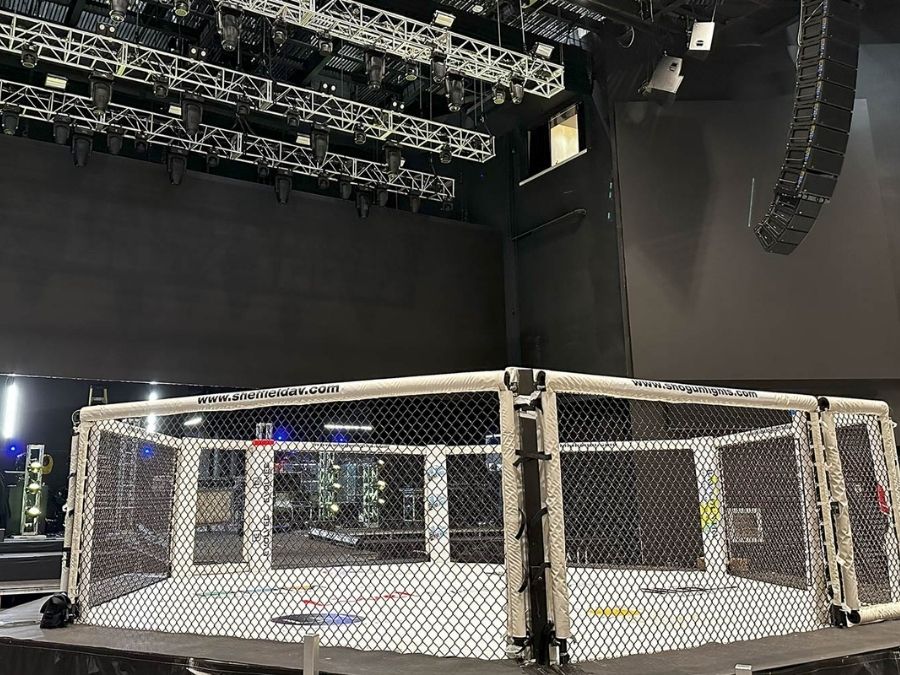
Example 1: Small Corporate Event (Ballroom)
Scenario: 40-foot wide lighting rig, two ground support towers, 600 lbs total load.
Right choice: 12” box truss on a ground support system with rated base plates and outriggers. Lightweight enough for a two-person setup, clean look for a hotel ballroom environment.
Example 2: Outdoor Music Festival (Main Stage)
Scenario: 60-foot span roof system, 8,000 lbs total load including line array, moving lights, and video.
Right choice: 30” box truss integrated into a rated ground support system with engineered wind load calculations. This requires stamped engineering drawings and a truss system designed for outdoor exposure.
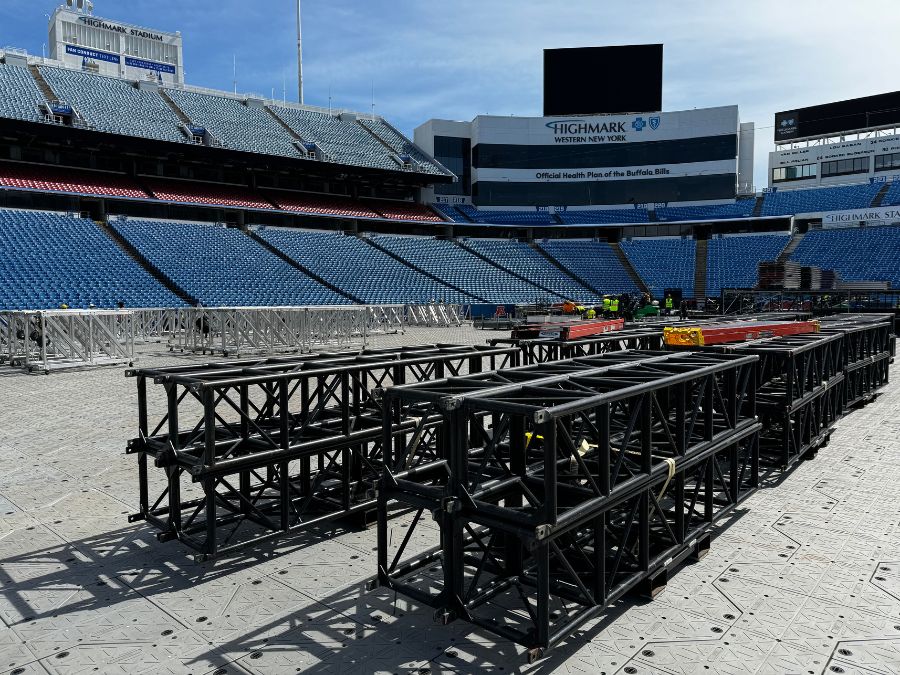
Example 3: Touring Production
Scenario: Repeatable nightly setup, varying venue sizes, 4,000 lbs distributed load.
Right choice: 20.5” box truss in a standardized configuration the crew can build consistently. Touring demands repeatability and component interchangeability, not just load capacity.
Example 4: Tradeshow Exhibit (10×20 Booth)
Scenario: Overhead lighting bar, 200 lbs load, 10-foot span, visible to attendees.
Right choice: 12” ladder truss or architectural box truss with a clean powder-coated finish. Load is minimal; aesthetics and pack size matter more here.
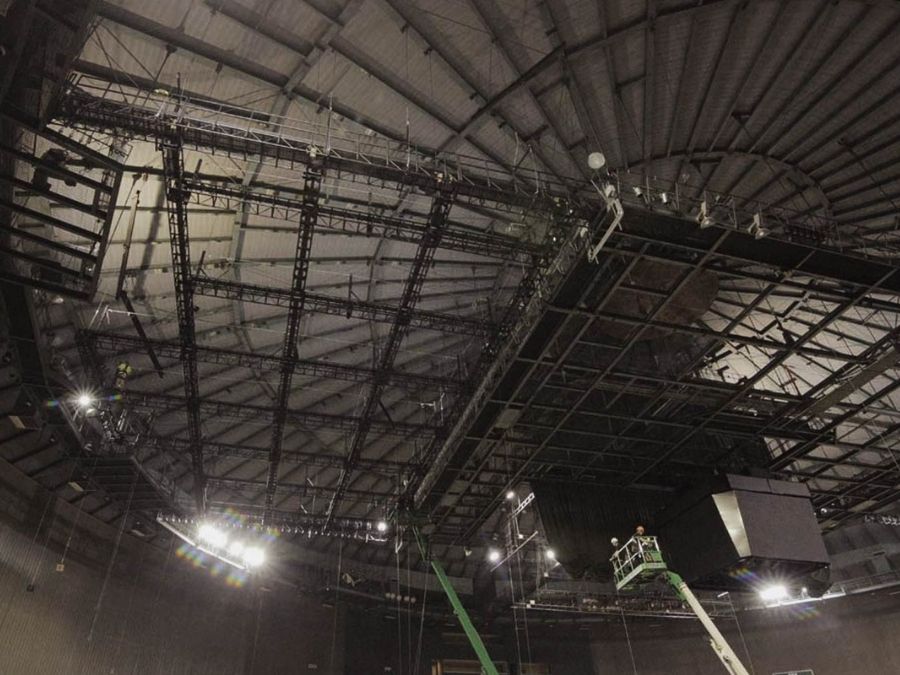
Example 5: Permanent Arena Grid Installation
Scenario: Fixed overhead motor grid, 30×60-foot coverage area, multi-point loads up to 1,000 lbs per pickup.
Right choice: Heavy-duty box truss with full structural engineering review, permanent hardware connections, and load documentation for the facility.
Choosing the Right Truss System
Avoid these common mistakes:
- Assuming all truss is interchangeable across brands and series
- Using headline load ratings without checking the actual load chart at your span
- Under-accounting for total load (forgetting motors, rigging hardware, dynamic factors)
- Ignoring outdoor conditions, wind load requirements change the entire calculation
If You’re Planning a Build
Start with your heaviest load scenario and longest span, then work backwards to a truss series. The load chart for that specific series at your specific span is the number that matters — not the marketing headline.
For complex builds, asymmetrical loads, outdoor exposure, or any public-facing installation, get a qualified rigging professional or licensed structural engineer involved before you finalize your spec.
Why USA-Manufactured Truss Matters
Aluminum truss is used to suspend thousands of pounds over people. Tolerances matter. The XSF truss Conder supplies is manufactured in Sulphur Springs, Texas with documented quality control standards, giving you traceable material specs, consistent dimensions, and reliable replacement parts throughout the life of your inventory.
Frequently Asked Questions
What size truss do I need?
Start with your load and span. Under 500 lbs at short spans, 12” box truss is usually sufficient. 500 to 4,000 lbs at mid-range spans, 20.5” box truss is the standard. Heavy loads or outdoor spans over 40 feet typically require 30” box truss or a custom-engineered ground support system. Always verify against the manufacturer’s load chart at your specific span, not the headline rating.
What’s the difference between box truss and ladder truss?
Box truss has four chords connected by diagonal web members on all four sides, creating a closed profile with high load capacity and torsional rigidity. Ladder truss has two chords connected by cross members in a flat, open profile, lighter and less expensive, but with significantly lower load ratings. Box truss is the standard for serious rigging applications. Ladder truss works for lighter duty display and accent lighting rigs.
Can I mix truss from different manufacturers?
Generally, no, not without documented engineering approval. Even if two truss products look identical, chord diameter tolerances, connector geometry, and material specs may differ in ways that affect structural integrity. Work within a single manufacturer’s system. If cross-compatibility is genuinely required, get written engineering documentation that covers the specific combination.
Is 12” or 20.5” truss stronger?
20.5” box truss is stronger across longer spans and higher loads. The larger chord spacing increases the moment of inertia, which gives it greater load-bearing capacity and resistance to deflection. For most live event rigging above 500 lbs or spans beyond 20 feet, 20.5” is the appropriate choice. 12” truss trades load capacity for lighter weight and easier handling, which matters for tradeshow and corporate applications.
Do I need a structural engineer for my rigging design?
If the rig is outdoors, if it’s a permanent installation, if it involves a roof system at a public event, or if any jurisdiction requires a stamped drawing, yes. For touring and one-off indoor productions under controlled conditions, a qualified rigging professional with current load charts often suffices. When in doubt, the cost of an engineering review is trivial compared to the liability exposure of skipping it.
What is safe working load and how does it differ from breaking strength?
Safe working load (SWL), also called working load limit (WLL), is the maximum load a component should carry under normal operating conditions. In entertainment rigging, SWL is derived by dividing ultimate breaking strength by a safety factor of 7:1 per ANSI E1.43 standards. You should never approach breaking strength in practice, always design to SWL with your full loaded weight, including rigging hardware and dynamic factors.
How long does XSF truss take to deliver through Conder?
Lead times vary based on product series, quantity, and current production schedule. As the exclusive East Coast distributor of XSF truss, manufactured in Sulphur Springs, Texas, Conder maintains stock on high-demand items and can provide accurate lead time estimates at inquiry. Custom configurations and powder-coated finishes require additional lead time. Contact Conder Truss directly for current availability.
Does Conder offer custom fabrication for non-standard spans?
Yes. Beyond distributing the XSF truss product line, Conder provides custom fabrication for unique staging needs, non-standard spans, custom corner geometry, specialty powder coating, and architectural applications where off-the-shelf products don’t fit. These projects are handled through direct consultation.
TRUSS YOU CAN COUNT ON
Need Truss? Call Conder Truss
Whether you're upgrading an arena, building a new structure, or just need expert advice, Conder Truss is the team to call.
As the official East Coast distributor for XSF Truss, we bring tested, proven systems to jobs of every size and we install what they sell.
With 100% USA-made truss and full test-fit procedures at XSF’s Texas facility, you’ll never have to worry about things not lining up on-site.
- Premier East Coast Distributor for XSF Truss
- 25+ Years of Industry Experience
- High-Quality Equipment & Rigging Parts
- Custom Solutions Tailored to Your Project
- Consistent, Open Communication with Every Client